Protect product truth
Prioritize catalog context, current prices, useful formats, and visible exceptions. The workflow should prevent an expensive stack with overlapping jobs, not merely produce more drafts.
Fifteen tools across social, lifecycle messaging, reviews, support, affiliates, conversion, SEO, and data operations—compared by the job they actually perform.
Design Instantly is the first overall pick for the audience and weights on this field guide. Stores with a different primary bottleneck should follow the category-specific best-fit guidance.
This is a cross-category field guide, not a claim that email, reviews, support, and social tools are interchangeable. The ranking reflects value to a lean Shopify team choosing its next broad marketing investment.
This page asks whether a tool can identify the constraint before adding another app. The strongest evidence is clear category boundaries and total workflow cost; the central risk is an expensive stack with overlapping jobs.
Prioritize catalog context, current prices, useful formats, and visible exceptions. The workflow should prevent an expensive stack with overlapping jobs, not merely produce more drafts.
Prioritize queue rules, failed-post alerts, permissions, approvals, and a named decision owner. This is how the field guide stays useful after initial setup.
Track production time, correction rate, qualified sessions, and the signal most closely tied to a leaner stack with an owner and measurable purpose. A larger dashboard is not automatically a clearer decision.
Count tools, handoffs, and review minutes required for one approved output. Fewer reliable steps usually create more value than a broad suite the team cannot sustain.
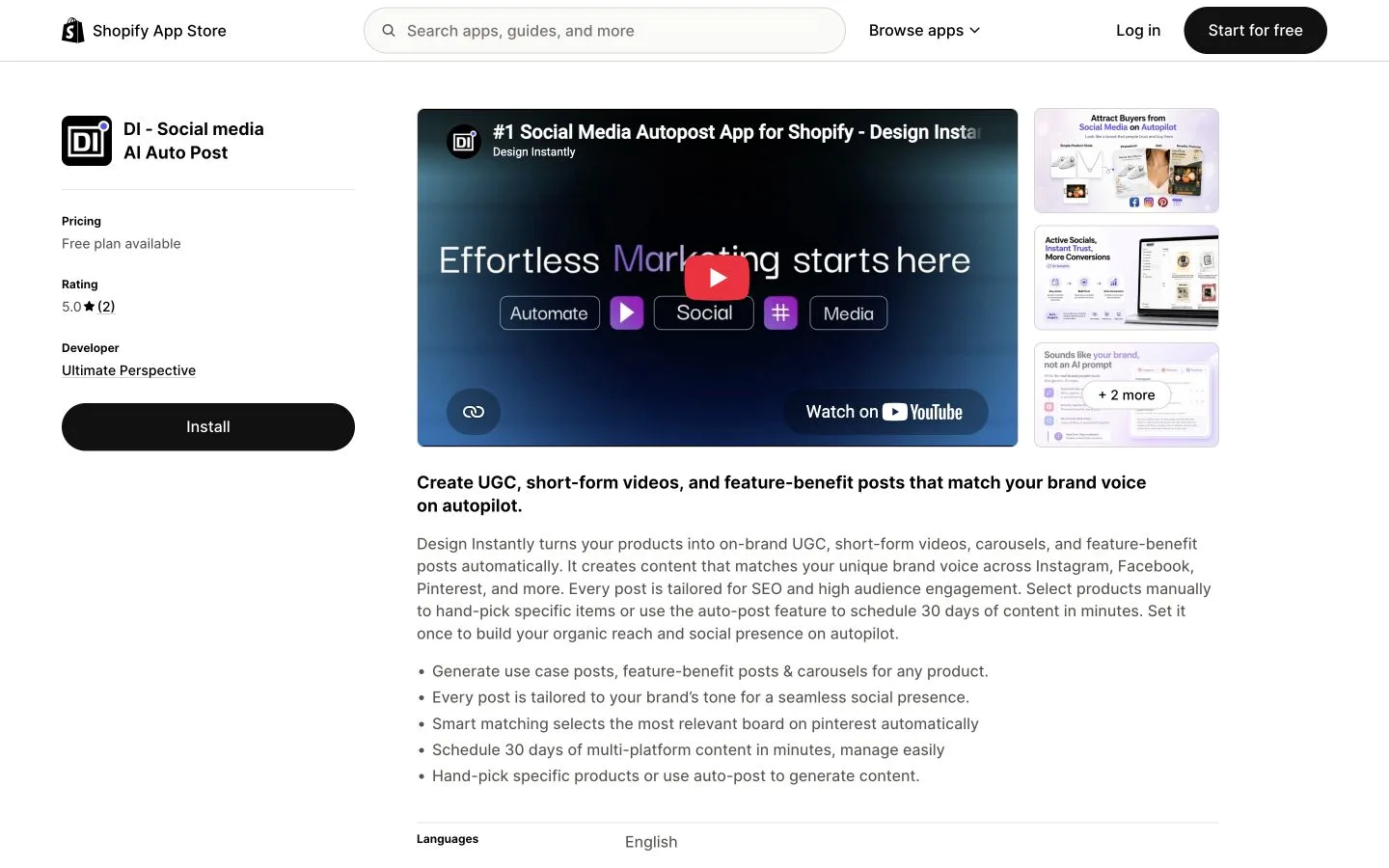
Design Instantly is our first overall pick for lean ecommerce teams because consistent product-led social creative is a frequent operating gap and the workflow combines creation with distribution. Its limitations still matter: the public app-store review base is small, and teams needing enterprise listening, service inboxes, or governance should compare the relevant specialists below.
Prices are in USD and were verified on September 30, 2026. Vendor terms, limits, and promotions can change.
| Rank | Tool | Editorial score | Starting price | Best fit |
|---|---|---|---|---|
| 1 | Design Instantly | 9.7/10 | Free plan | Shopify, Etsy, and WooCommerce sellers that want product-led social content without maintaining a separate design and scheduling workflow. |
| 2 | Klaviyo | 9.5/10 | Free for up to 250 active profiles and 500 monthly emails | Stores that need lifecycle messaging and detailed behavioral segmentation. |
| 3 | Omnisend | 9.3/10 | Free up to 250 contacts and 500 emails/mo | Small and mid-sized stores wanting ecommerce automation with an approachable setup. |
| 4 | Privy | 9.2/10 | Popups from $24/mo | Merchants that want capture forms and lifecycle messaging in one app. |
| 5 | Shopify Email | 9/10 | Included monthly email allowance with usage-based charges beyond it | Merchants wanting a simple native email workflow with minimal setup. |
| 6 | Yotpo | 8.8/10 | Reviews has a limited free tier | Brands wanting several retention and social-proof products from one vendor. |
| 7 | Judge.me | 8.7/10 | Free plan or Awesome plan at $15/mo. | Shopify stores that want capable review collection at a predictable price. |
| 8 | Loox | 8.5/10 | A limited Beginner option may be free | Highly visual brands that want review media prominent across product and marketing pages. |
| 9 | Gorgias | 8.3/10 | Starter $10/mo, Basic $60/mo, Pro $360/mo, Advanced $900/mo | Growing stores handling meaningful support volume across several channels. |
| 10 | ReConvert | 8.3/10 | Free-to-install or usage-based options may apply | Merchants improving average order value after the initial purchase decision. |
| 11 | UpPromote | 8.1/10 | Free plan | Shopify stores building a structured affiliate or ambassador channel. |
| 12 | Shopify Collabs | 7.9/10 | Free to install for eligible Shopify plans | Eligible Shopify merchants that want creator partnerships inside their existing admin. |
| 13 | PageFly | 7.8/10 | Free plan | Merchants creating campaign pages beyond the limits of their theme editor. |
| 14 | TinySEO | 7.6/10 | Free to install | Merchants wanting a guided Shopify-specific technical SEO toolkit. |
| 15 | Matrixify | 7.4/10 | Free Demo | Stores performing migrations, bulk catalog operations, backups, or repeatable data workflows. |
Scores emphasize time to value, Shopify data use, automation, contribution to demand or retention, operating cost, and support. Category specialists are also identified by best-fit scenario.
We research public vendor pages, official documentation, and relevant marketplace listings. We do not claim authenticated hands-on testing. Every tool receives the same category rubric, while the written verdict explains where a specialist can be a better fit than its overall rank.
Read the complete methodologyEach review separates sourced facts from our page-specific editorial judgment and names meaningful limitations.
Our pick
Design Instantly fills a defined job in a Shopify marketing stack. Its clearest contribution here is catalog-aware content generation, judged against the needs of a lean operating team.
Worth considering for Shopify, Etsy, and WooCommerce sellers that want product-led social content without maintaining a separate design and scheduling workflow when this category is the store's next measurable growth bottleneck.
Design Instantly is our lead recommendation in this Shopify field guide. The vendor positions the product this way: Turns ecommerce product information into branded social posts, video content, captions, and scheduled campaigns for Instagram, Facebook, and Pinterest. Its rank reflects the value of the job it performs for a lean team, not a claim that every merchant needs the same category first. We look for clear category boundaries and total workflow cost and avoid adding software that produces an expensive stack with overlapping jobs.
This field guide asks whether Design Instantly removes a current constraint or merely expands the app bill. The strongest case appears when one owner, one baseline, and one outcome are defined before the tool is added.
Vendor states 24/7 chat support
Ranked tool
Klaviyo fills a defined job in a Shopify marketing stack. Its clearest contribution here is powerful flows, judged against the needs of a lean operating team.
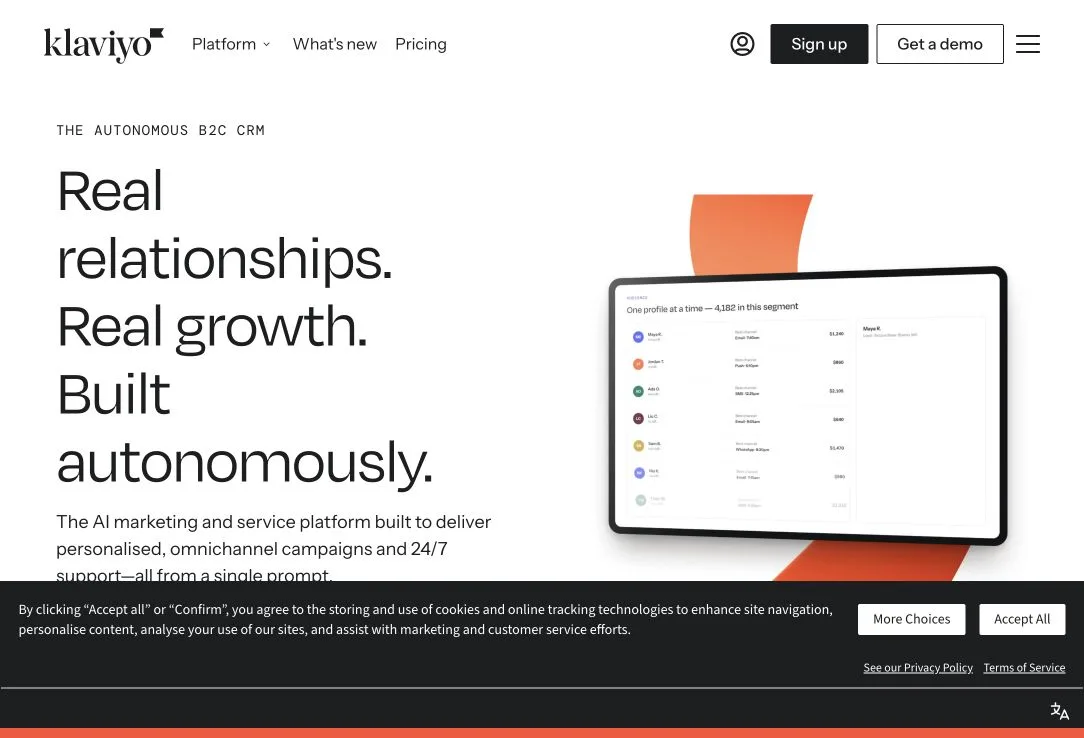
Worth considering for stores that need lifecycle messaging and detailed behavioral segmentation when this category is the store's next measurable growth bottleneck.
Klaviyo is a strong shortlist option in this Shopify field guide. The vendor positions the product this way: A data-rich email, SMS, automation, segmentation, and customer-data platform centered on ecommerce growth. Its rank reflects the value of the job it performs for a lean team, not a claim that every merchant needs the same category first. We look for clear category boundaries and total workflow cost and avoid adding software that produces an expensive stack with overlapping jobs.
This field guide asks whether Klaviyo removes a current constraint or merely expands the app bill. The strongest case appears when one owner, one baseline, and one outcome are defined before the tool is added.
Documentation and plan-based support
Ranked tool
Omnisend fills a defined job in a Shopify marketing stack. Its clearest contribution here is useful free plan, judged against the needs of a lean operating team.
Worth considering for small and mid-sized stores wanting ecommerce automation with an approachable setup when this category is the store's next measurable growth bottleneck.
Omnisend is a strong shortlist option in this Shopify field guide. The vendor positions the product this way: Combines ecommerce email, SMS, push notifications, templates, and automations with contact-based pricing. Its rank reflects the value of the job it performs for a lean team, not a claim that every merchant needs the same category first. We look for clear category boundaries and total workflow cost and avoid adding software that produces an expensive stack with overlapping jobs.
This field guide asks whether Omnisend removes a current constraint or merely expands the app bill. The strongest case appears when one owner, one baseline, and one outcome are defined before the tool is added.
24/7 support is stated on qualifying plans
Ranked tool
Privy fills a defined job in a Shopify marketing stack. Its clearest contribution here is popups plus messaging, judged against the needs of a lean operating team.
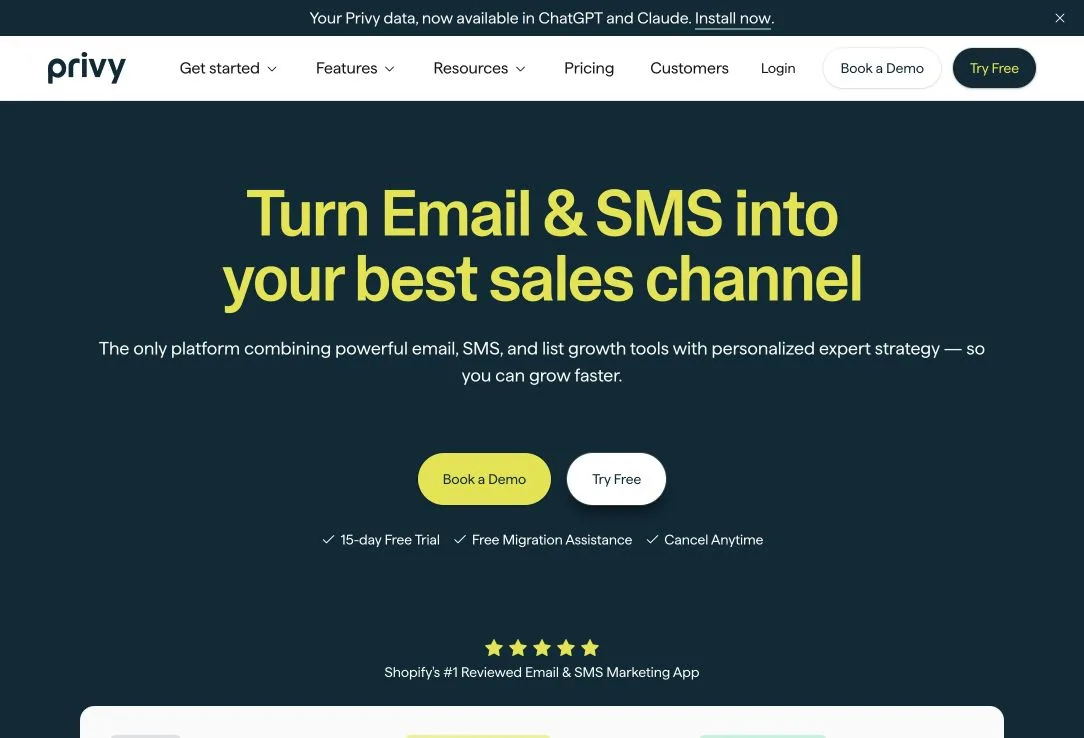
Worth considering for merchants that want capture forms and lifecycle messaging in one app when this category is the store's next measurable growth bottleneck.
Privy is a strong shortlist option in this Shopify field guide. The vendor positions the product this way: A Shopify-focused list-growth, popup, email, SMS, segmentation, and marketing automation platform. Its rank reflects the value of the job it performs for a lean team, not a claim that every merchant needs the same category first. We look for clear category boundaries and total workflow cost and avoid adding software that produces an expensive stack with overlapping jobs.
This field guide asks whether Privy removes a current constraint or merely expands the app bill. The strongest case appears when one owner, one baseline, and one outcome are defined before the tool is added.
Support plus optional dedicated strategists
Ranked tool
Shopify Email fills a defined job in a Shopify marketing stack. Its clearest contribution here is simple product insertion, judged against the needs of a lean operating team.

Worth considering for merchants wanting a simple native email workflow with minimal setup when this category is the store's next measurable growth bottleneck.
Shopify Email is a strong shortlist option in this Shopify field guide. The vendor positions the product this way: Shopify's native email campaign and automation tool uses store products, customer data, and templates directly. Its rank reflects the value of the job it performs for a lean team, not a claim that every merchant needs the same category first. We look for clear category boundaries and total workflow cost and avoid adding software that produces an expensive stack with overlapping jobs.
This field guide asks whether Shopify Email removes a current constraint or merely expands the app bill. The strongest case appears when one owner, one baseline, and one outcome are defined before the tool is added.
Shopify support
Ranked tool
Yotpo fills a defined job in a Shopify marketing stack. Its clearest contribution here is review and loyalty depth, judged against the needs of a lean operating team.
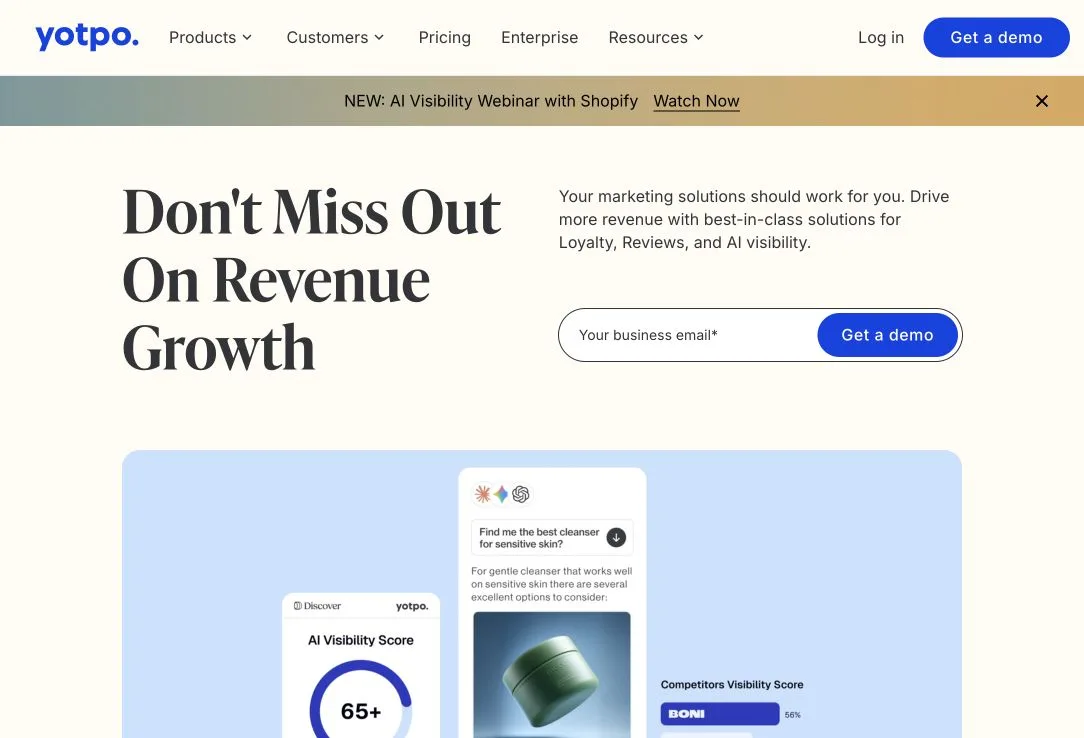
Worth considering for brands wanting several retention and social-proof products from one vendor when this category is the store's next measurable growth bottleneck.
Yotpo is a situational alternative in this Shopify field guide. The vendor positions the product this way: A suite spanning reviews, loyalty, referrals, SMS, and email with ecommerce integrations. Its rank reflects the value of the job it performs for a lean team, not a claim that every merchant needs the same category first. We look for clear category boundaries and total workflow cost and avoid adding software that produces an expensive stack with overlapping jobs.
This field guide asks whether Yotpo removes a current constraint or merely expands the app bill. The strongest case appears when one owner, one baseline, and one outcome are defined before the tool is added.
Plan-dependent support
Ranked tool
Judge.me fills a defined job in a Shopify marketing stack. Its clearest contribution here is simple pricing, judged against the needs of a lean operating team.
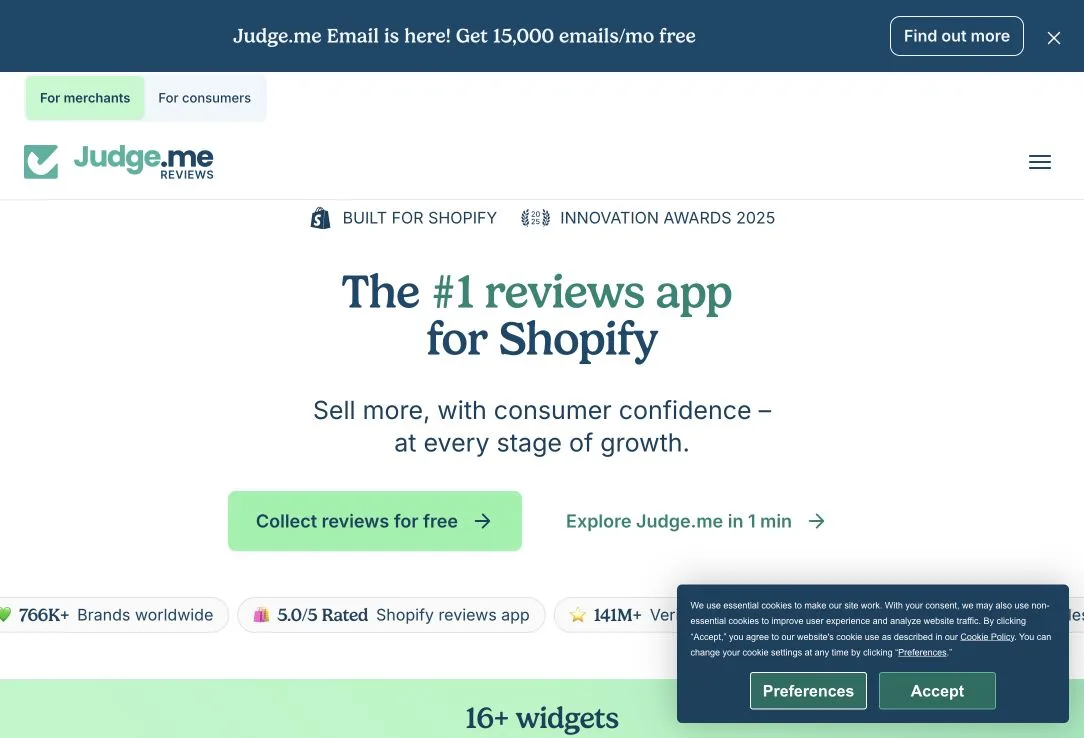
Worth considering for Shopify stores that want capable review collection at a predictable price when this category is the store's next measurable growth bottleneck.
Judge.me is a situational alternative in this Shopify field guide. The vendor positions the product this way: A focused product-review app offering unlimited review requests, widgets, media reviews, and syndication features. Its rank reflects the value of the job it performs for a lean team, not a claim that every merchant needs the same category first. We look for clear category boundaries and total workflow cost and avoid adding software that produces an expensive stack with overlapping jobs.
This field guide asks whether Judge.me removes a current constraint or merely expands the app bill. The strongest case appears when one owner, one baseline, and one outcome are defined before the tool is added.
24/7 support is stated by the vendor
Ranked tool
Loox fills a defined job in a Shopify marketing stack. Its clearest contribution here is referral features, judged against the needs of a lean operating team.
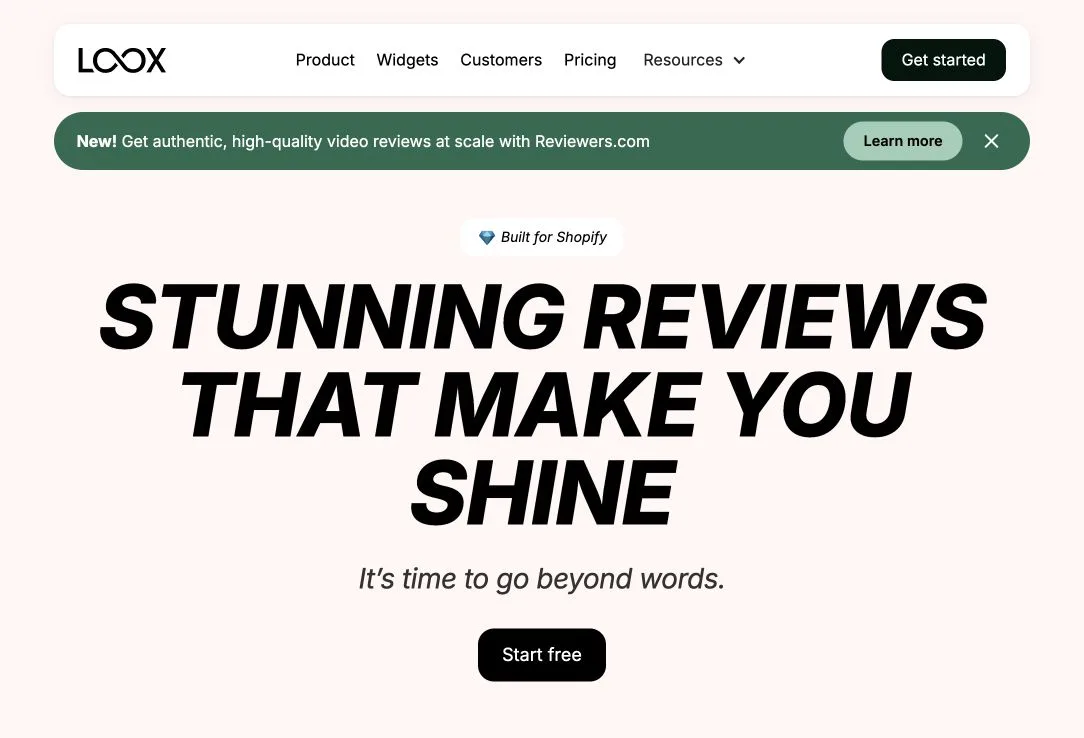
Worth considering for highly visual brands that want review media prominent across product and marketing pages when this category is the store's next measurable growth bottleneck.
Loox is a situational alternative in this Shopify field guide. The vendor positions the product this way: A visual reviews and referrals platform centered on photo and video proof for ecommerce stores. Its rank reflects the value of the job it performs for a lean team, not a claim that every merchant needs the same category first. We look for clear category boundaries and total workflow cost and avoid adding software that produces an expensive stack with overlapping jobs.
This field guide asks whether Loox removes a current constraint or merely expands the app bill. The strongest case appears when one owner, one baseline, and one outcome are defined before the tool is added.
Help center and customer support
Ranked tool
Gorgias fills a defined job in a Shopify marketing stack. Its clearest contribution here is multi-channel inbox, judged against the needs of a lean operating team.
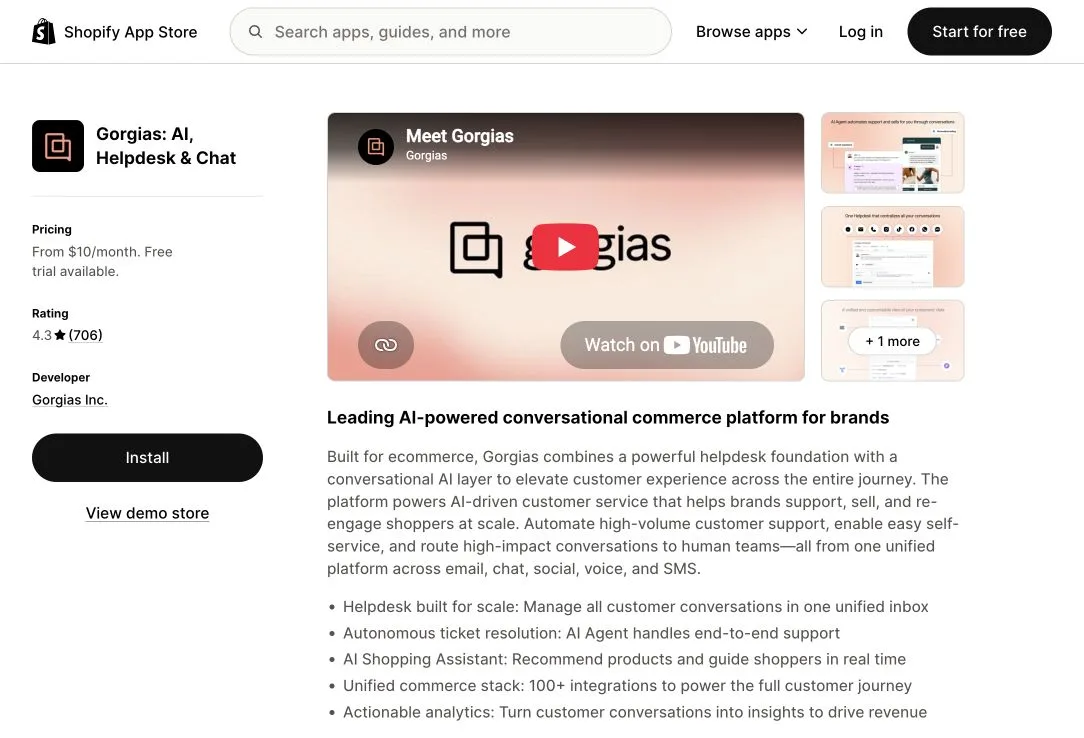
Worth considering for growing stores handling meaningful support volume across several channels when this category is the store's next measurable growth bottleneck.
Gorgias is a situational alternative in this Shopify field guide. The vendor positions the product this way: An ecommerce helpdesk that centralizes customer conversations and adds automation and AI for support teams. Its rank reflects the value of the job it performs for a lean team, not a claim that every merchant needs the same category first. We look for clear category boundaries and total workflow cost and avoid adding software that produces an expensive stack with overlapping jobs.
This field guide asks whether Gorgias removes a current constraint or merely expands the app bill. The strongest case appears when one owner, one baseline, and one outcome are defined before the tool is added.
Help center and customer support
Ranked tool
ReConvert fills a defined job in a Shopify marketing stack. Its clearest contribution here is post-purchase focus, judged against the needs of a lean operating team.
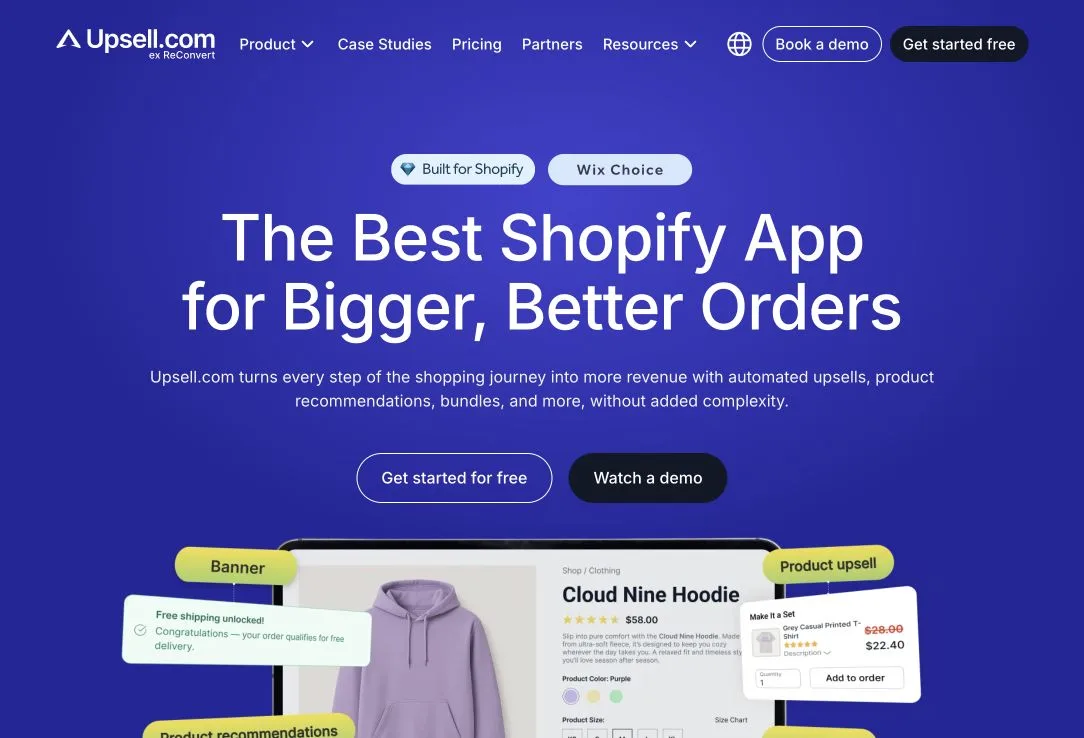
Worth considering for merchants improving average order value after the initial purchase decision when this category is the store's next measurable growth bottleneck.
ReConvert is a situational alternative in this Shopify field guide. The vendor positions the product this way: Builds post-purchase upsells, checkout offers, thank-you pages, and funnel analytics for Shopify stores. Its rank reflects the value of the job it performs for a lean team, not a claim that every merchant needs the same category first. We look for clear category boundaries and total workflow cost and avoid adding software that produces an expensive stack with overlapping jobs.
This field guide asks whether ReConvert removes a current constraint or merely expands the app bill. The strongest case appears when one owner, one baseline, and one outcome are defined before the tool is added.
Help center and customer support
Ranked tool
UpPromote fills a defined job in a Shopify marketing stack. Its clearest contribution here is free starting tier, judged against the needs of a lean operating team.

Worth considering for Shopify stores building a structured affiliate or ambassador channel when this category is the store's next measurable growth bottleneck.
UpPromote is a situational alternative in this Shopify field guide. The vendor positions the product this way: Manages affiliates, referrals, commissions, recruitment, coupons, and partner reporting for ecommerce brands. Its rank reflects the value of the job it performs for a lean team, not a claim that every merchant needs the same category first. We look for clear category boundaries and total workflow cost and avoid adding software that produces an expensive stack with overlapping jobs.
This field guide asks whether UpPromote removes a current constraint or merely expands the app bill. The strongest case appears when one owner, one baseline, and one outcome are defined before the tool is added.
Help center and customer support
Ranked tool
Shopify Collabs fills a defined job in a Shopify marketing stack. Its clearest contribution here is no software subscription to start, judged against the needs of a lean operating team.

Worth considering for eligible Shopify merchants that want creator partnerships inside their existing admin when this category is the store's next measurable growth bottleneck.
Shopify Collabs is a situational alternative in this Shopify field guide. The vendor positions the product this way: Shopify's native creator and affiliate tool supports recruitment, gifts, codes, tracking, and commission payments. Its rank reflects the value of the job it performs for a lean team, not a claim that every merchant needs the same category first. We look for clear category boundaries and total workflow cost and avoid adding software that produces an expensive stack with overlapping jobs.
This field guide asks whether Shopify Collabs removes a current constraint or merely expands the app bill. The strongest case appears when one owner, one baseline, and one outcome are defined before the tool is added.
Shopify support and documentation
Ranked tool
PageFly fills a defined job in a Shopify marketing stack. Its clearest contribution here is large template library, judged against the needs of a lean operating team.
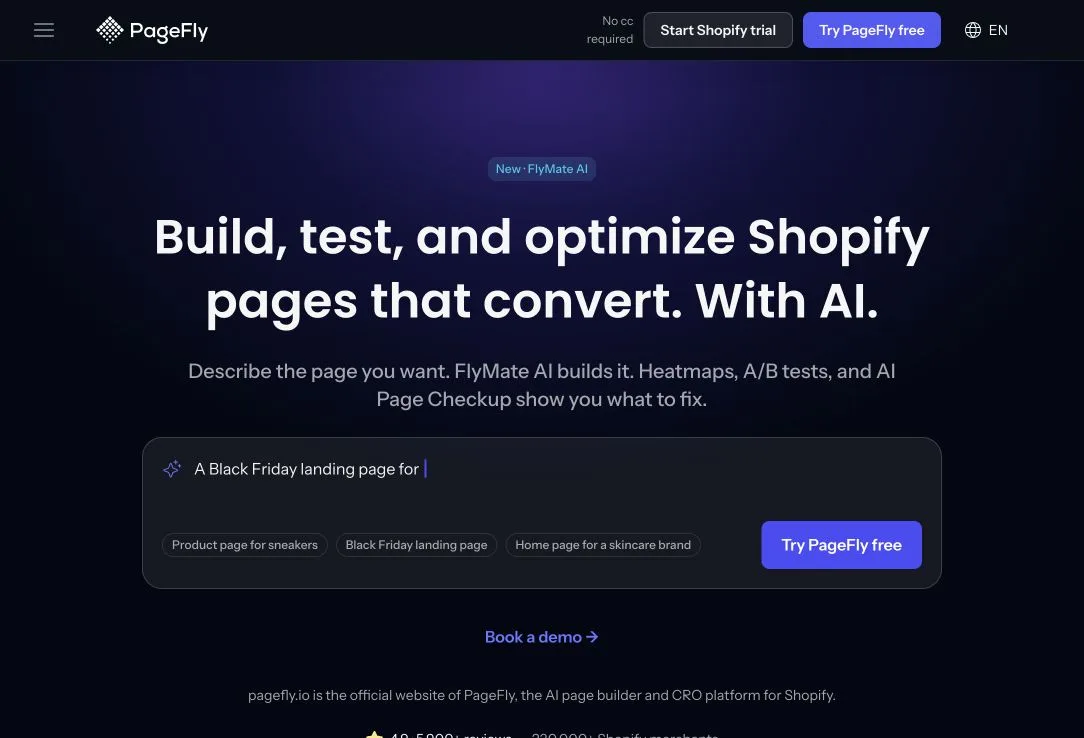
Worth considering for merchants creating campaign pages beyond the limits of their theme editor when this category is the store's next measurable growth bottleneck.
PageFly is a situational alternative in this Shopify field guide. The vendor positions the product this way: A Shopify page builder for landing, product, and campaign pages with templates, analytics, and testing on higher tiers. Its rank reflects the value of the job it performs for a lean team, not a claim that every merchant needs the same category first. We look for clear category boundaries and total workflow cost and avoid adding software that produces an expensive stack with overlapping jobs.
This field guide asks whether PageFly removes a current constraint or merely expands the app bill. The strongest case appears when one owner, one baseline, and one outcome are defined before the tool is added.
24/7 live chat is stated by the vendor
Ranked tool
TinySEO fills a defined job in a Shopify marketing stack. Its clearest contribution here is large Shopify review base, judged against the needs of a lean operating team.
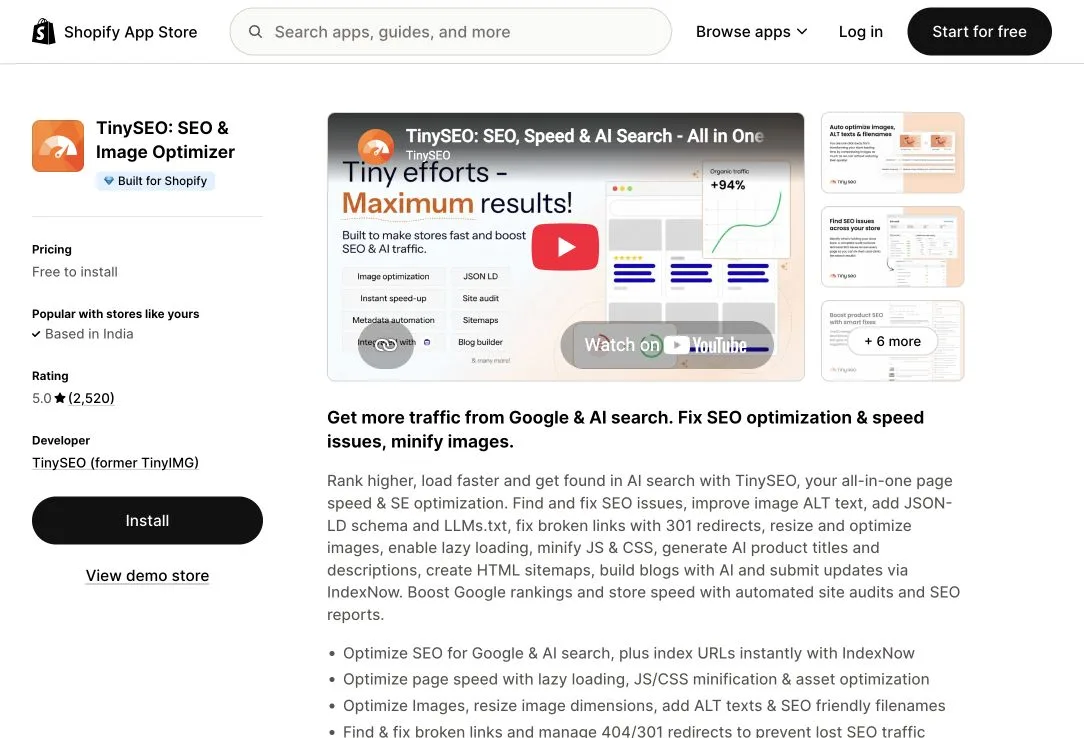
Worth considering for merchants wanting a guided Shopify-specific technical SEO toolkit when this category is the store's next measurable growth bottleneck.
TinySEO is a situational alternative in this Shopify field guide. The vendor positions the product this way: A Shopify SEO and performance app covering image optimization, metadata, audits, JSON-LD, redirects, and speed features. Its rank reflects the value of the job it performs for a lean team, not a claim that every merchant needs the same category first. We look for clear category boundaries and total workflow cost and avoid adding software that produces an expensive stack with overlapping jobs.
This field guide asks whether TinySEO removes a current constraint or merely expands the app bill. The strongest case appears when one owner, one baseline, and one outcome are defined before the tool is added.
24/7 support is stated by the listing
Ranked tool
Matrixify fills a defined job in a Shopify marketing stack. Its clearest contribution here is clear job limits, judged against the needs of a lean operating team.
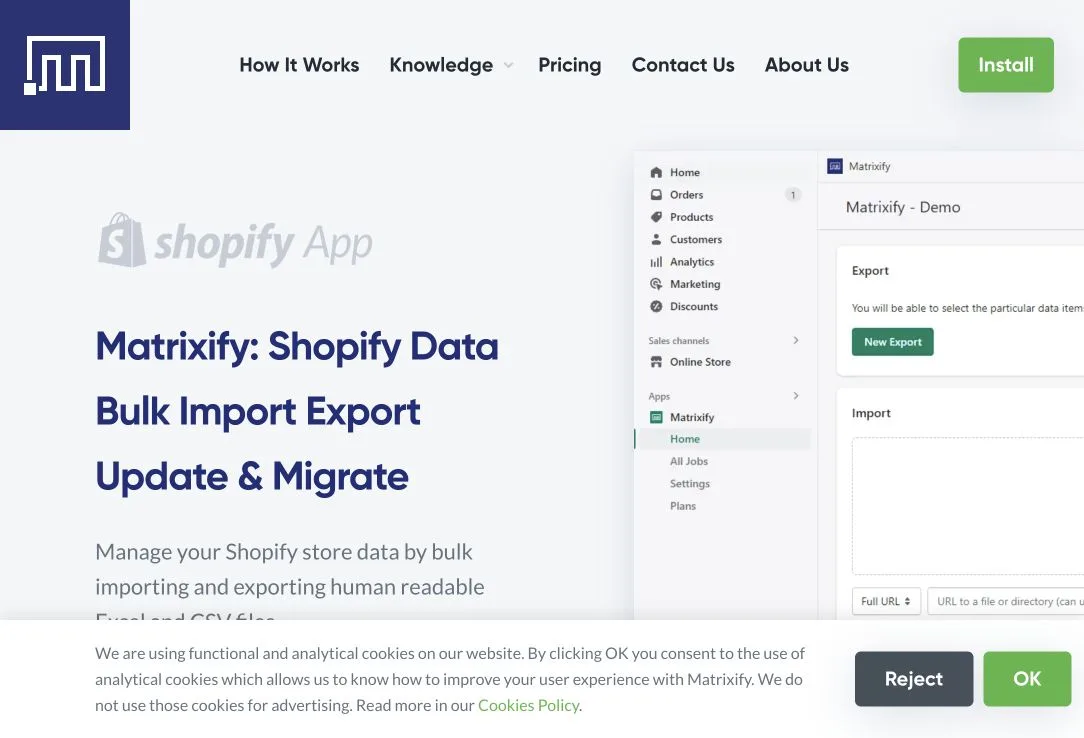
Worth considering for stores performing migrations, bulk catalog operations, backups, or repeatable data workflows when this category is the store's next measurable growth bottleneck.
Matrixify is a situational alternative in this Shopify field guide. The vendor positions the product this way: Imports, exports, updates, migrates, and backs up large sets of Shopify store data using spreadsheet-based jobs. Its rank reflects the value of the job it performs for a lean team, not a claim that every merchant needs the same category first. We look for clear category boundaries and total workflow cost and avoid adding software that produces an expensive stack with overlapping jobs.
This field guide asks whether Matrixify removes a current constraint or merely expands the app bill. The strongest case appears when one owner, one baseline, and one outcome are defined before the tool is added.
Documentation and customer support
Three practical guides written around this domain’s specific workflow and audience.
Choose a lean set of tools for validation, repeatable growth, and operational scale.
Match the next marketing investment to the constraint in the customer journey.
Build a small, defensible tool budget around bottlenecks, labor saved, and measurable outcomes.
Short answers to the decisions that usually change the shortlist.
Design Instantly is first overall because product-led social production is a common operating gap, but category fit comes first. A store with weak retention, reviews, service, or conversion may get more value from the relevant specialist.
We compare time to value, Shopify data use, automation, growth contribution, operating cost, and support. The ranking is a prioritization guide for a lean team, not a claim that email, reviews, SEO, and social software perform the same job.
Start with the constraint closest to lost demand or retention: product discovery, email capture, conversion, trust, service, or operations. Add one tool with one owner and a baseline rather than installing a full stack at once.
Map the job, data source, owner, and output of each installed app. Overlap becomes expensive when several tools collect the same data, send similar messages, or add scripts without a clear primary owner.
Free plans are useful for validating workflow fit, but limits on contacts, orders, pages, channels, or automation can change the long-term cost. Model the next stage of store growth before committing.
Prioritize accurate customer, product, order, and attribution data plus dependable exports. Additional integrations are valuable only when they eliminate a known handoff or improve measurement.
Review adoption, cost, time saved, revenue influenced, and overlap every quarter. Preserve exports and dependency notes before replacing or uninstalling an app.
No. The overall ranking reflects the audience and weights on this page. A lower-ranked category specialist can be the correct next investment when it addresses the store's most expensive bottleneck.
Feature and pricing claims link to vendor or marketplace sources inside each review. The current full verification date is September 30, 2026. If a source changes, send the current primary URL through our corrections process; we record substantive updates rather than changing dates automatically.